
Are sprouts more than just hippie-veggies?
Posted on January 29th 2018 in Recipes
The best-known sprouts are probably soy- or mungbean sprouts in Asian woks. Most other seedlings have previously been accused of being the hippie-veggies of barefooted folks wearing tie-die shirts and of belonging to a bygone era. Today, however, slowly but surely they are brought out of their shadowy existence, and by and large praised as superfood. Let’s take a closer look today.
What are sprouts?
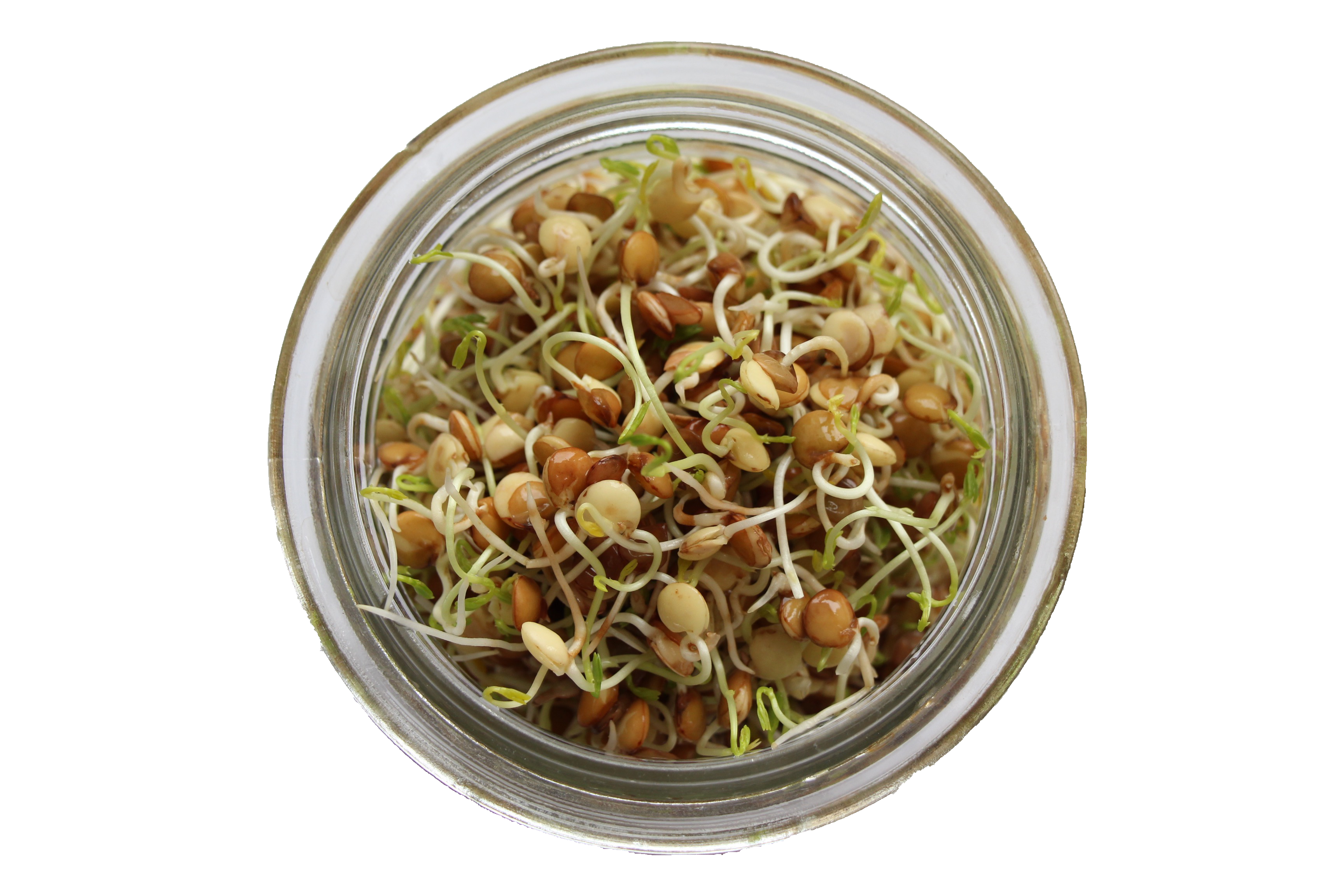
In general, a sprout or shoot is the early growth of a plant. When talking about sprouts in the culinary field, the term “food sprouts” is commonly used. Although you could also include real sprouts like asparagus or bamboo shoots to this group, today we only want to focus on the very young plants grown out of seeds of all sorts (e.g. the five-day-old lentil sprouts in the picture above).
What can I grow edible sprouts out of?
Usually, all natural forms of plants provide whatever is needed for the next generation. At the present time, however, some of our fruits and vegetables are bred so that they contain only vestigial or no seeds at all. Examples would be bananas, seedless apples, watermelons, grapes and citrus fruits. Fortunately, we still have some seeds and germs, which can be grown into edible sprouts.
Food sprouts can be grown out of the following (just a small example):
- Cereal like wheat or spelt,
- Pseudocereals like millet, amaranth und buckwheat,
- Seeds like sunflower and mustard seeds,
- Legumes like lentils, soybeans and chickpeas.
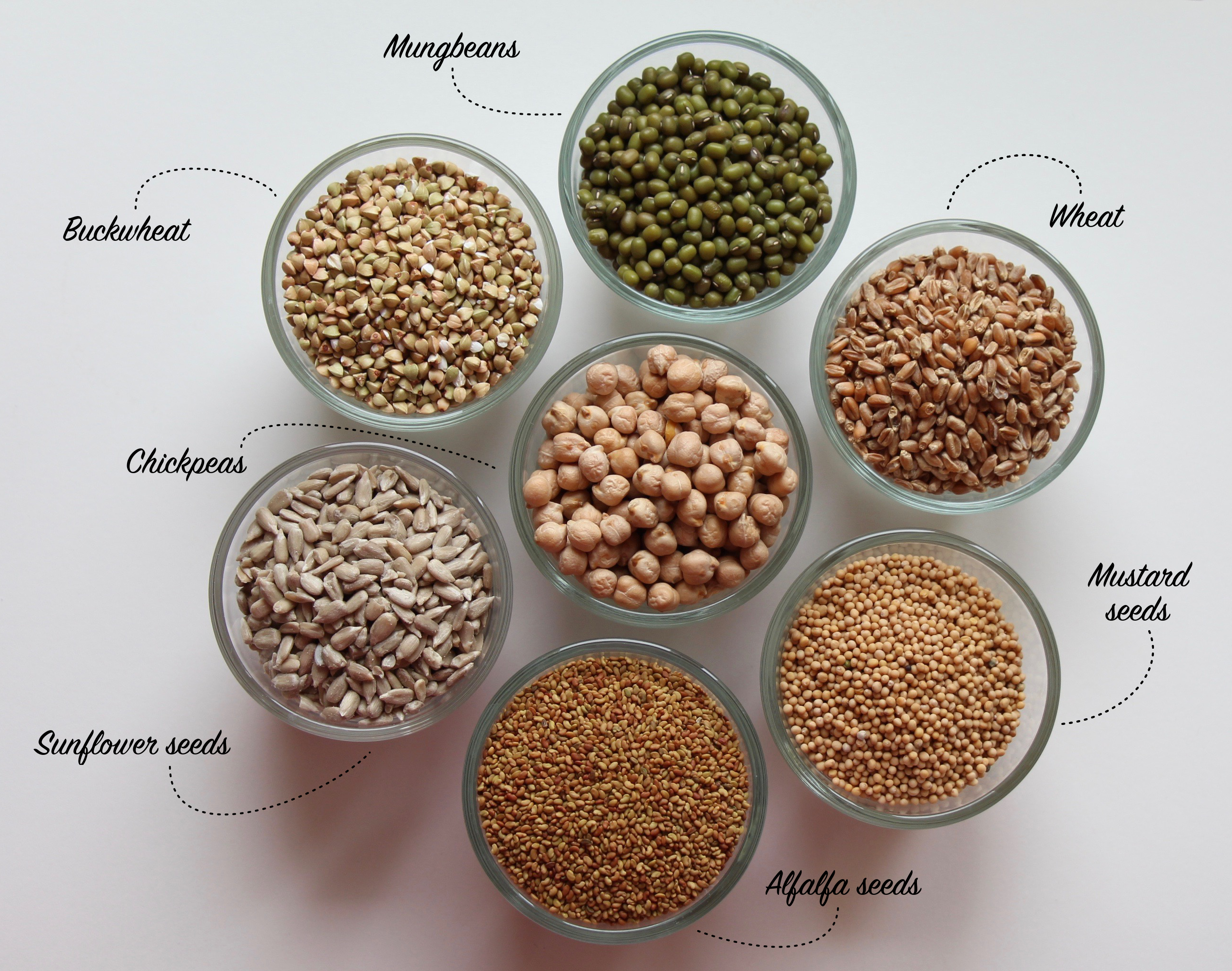
The following picture shows some of the foods, that I have in my kitchen most of the time and use for sprouting every once in a while.
DANGER: Sprouts made from seeds of the solanaceae, like potatoes and tomatoes are poisonous and should therefore not be eaten!
How healthy are sprouts actually?
There is only a very few poisonous sprouts, as mentioned. Still, one needs to be careful when sprouting, because toxic bacteria and fungi can spread easily in the humid sprouting environments. These toxins could lead to stomach pains, diarrhea and vomiting. How you can avoid this problem will be explained later on. For now I want to leave it at that and tell you about several reasons, why sprouts can enrich the human diet and should definitely be brought out of their shadowy existence.
The first advantage of sprouting is that substances, that the plant produces to protect itself from predatory herbivores (humans included), are greatly reduced. Especially through soaking, the amount of phytic acid is lowered significantly. Phytic acid is a substance in the outer shell of legumes and seeds, which binds on to minerals like calcium and iron and makes it for the body impossible to absorb. It would therefore harm us by robbing us of many of the vital nutrients, our bodies desperately need.
All little seedlings are packed full of nutrients, so that out of it, a much larger plant can emerge. They mostly contain very healthy proteins, complex carbohydrates and many minerals. In addition, the soaking and germination of the seeds produces large amounts of vitamins such as vitamins C and B1 (thiamine) as well as antioxidants. These are all very important for our immune system and the body’s defenses against diseases and radicals. Since we obtain antioxidants and vitamin C primarily from fresh fruit and vegetables, which are rather rare during the winter where I live, homegrown sprouts can act as a brilliant replacement.
There are several reasons, why regional, seasonal produce is so much better for us and the environment. For example it did not have to be harvested unripe in order to get to us in an eatable state, and it’s footprint is much smaller because it didn’t have to be transported for overly long distances. There is also evidence, that eating the foods with the same or similar DNA as pollen in the air around us might help reducing allergies. So what is more regional, than growing sprouts in your own kitchen?!
This all sounds very much like sprouts could be considered a “superfood“! However, I don’t like the term at all. Whenever it is used, it usually serves profitable marketing that wants to sell certain foods as being excessively healthy. So even when sprouts are often counted as superfoods, they are still far from being a magic bullet! Only on sprouts alone the body could not survive. It’s all in the mix: Our organism needs a wide range of foods, all of which have different nutrient compositions and can only provide health together.
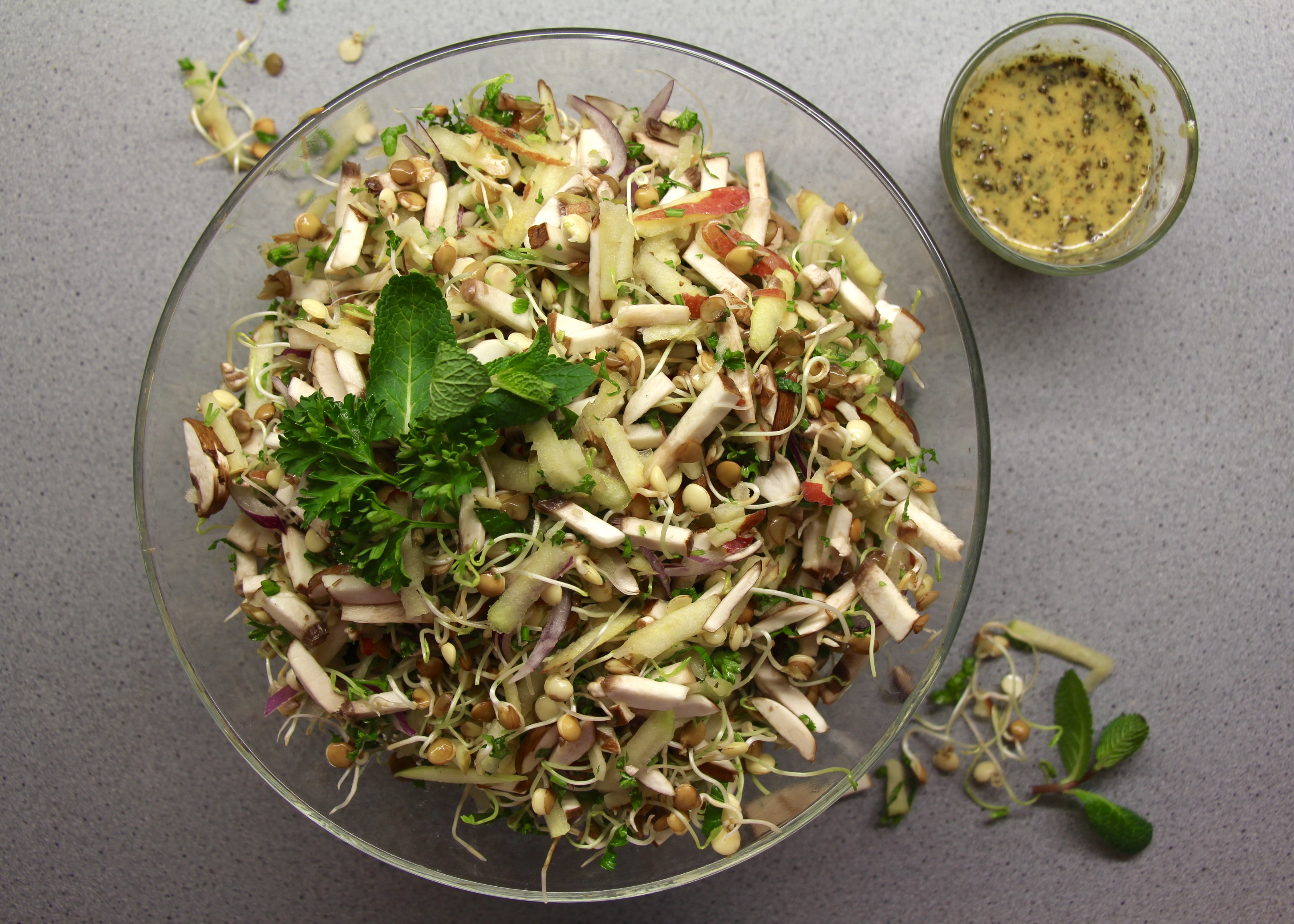
So here my conclusion: Every now and then during the cold season, we can grow, prepare and eat delicious sprouts to complete the limited variety of local produce. But don’t get stressed about it! Just remember, sprouting at home won’t even take much of your time, and it is so much cheaper than store-bought sprouts. Small sneak-preview: in the next blog article you will find my absolute favourite recipe for a winter salad with lentil sprouts. A tasty start if you want to give sprouting a chance.
How do I grow sprouts in my own kitchen?
In case you have never grown sprouts yourself before, this can serve as a small guide to how easy it is to do so. If you are already a professional in this field, please feel free to add any missing tips in the comments below.
The right equipment for sprouting
There are different ways to growing sprouts in your home. Some of them require equipment that has to be bought, for others you will only need things you might have in your home anyway. I gave you some examples of what kind of sprouters you can get in the links below, but these are only my search results on the internet and are meant to be examples rather than advertisement!
- A sprouting tower made of plastik, acrylic glass or stoneware (simplest form of the tower would be a sprouting tray like this)
- Sprouting jar with a screen lid and an additional stand to allow proper drainage
- A big, wide-mouth mason jar and a fine cheesecloth or kitchen towel and a rubber band
Until recently, I had a plastic sprouting glass. But when I tried to remove discolorations in the dishwasher, I accidentally melted it. The plastic still has the brown staining, but it doesn’t look like it could serve any kind of purpose anymore. That is why I am currently using the method I mentioned last and am extremely satisfied with: A one liter (approx. two pint/one quart) jar and a fine colander. Both items exist in my kitchen anyway.
Regardless of which method you choose to use, the following principles apply to all of them:
- The seedlings need a humid climate but must not sit in water. They should therefore not lie around openly, but the container they are in should have some kind of an opening for water to drain out.
- Sprouts always need some fresh air but mustn’t dry out. The container should therefore allow some air exchange with the environment, but retain enough humidity.
- They also need mild temperatures to grow, not too chilly and not too warm. When temperatures are too warm, mould or bacteria can form quickly, and when temperatures are too cold, growth slows down considerably.
It may sound rather complicated to find a reasonable mediocrity. However, if following some simple tricks, it is not so difficult after all!
The easiest method for growing sprouts
To show you how easy it is to grow sprouts in your own kitchen, I want to introduce you to my favourite example, the lentil sprouts. Other seeds such as chickpeas or flax seeds need extra care and may not be suitable for beginners. However, if you are interested in other types of sprouts, I can highly recommend this website about sprouting. Here you will find detailed instructions on specific requirements and also times for soaking and draining.
So, let’s get sprouting!
For one portion of lentil sprouts (approximately 160-200 g, approx. 6-7 oz when done) you will need about 80 g (3 oz) of brown lentils, which have to be soaked in plenty of water overnight or for 10-12 hours. Then the lentils need to be drained and rinsed. I simply use a fine kitchen sieve and press the convex side onto the mouth of the jar. Then I flip everything, let the soaking water drain, and flip back around so I can rinse the lentils thoroughly with fresh water. Then I turn it upside town again to drain the excess water one last time, until nothing drips out anymore.
Then I swing the jar around, so that all lentils fall back into the jar, place it in a spot without direct sunlight and with a mild climate (i. e. not next to the oven, nor next to an open window). My favorite place to let little seedlings do their magic is just an unoccupied corner of my kitchen counter. Since I just use a simple mason jar without a fancy screen lid, I simply put the glass lid up side down on the jar so that a little fresh air comes through a small slit, but the sprouts can’t dry out completely or collect dust.
After the soaking process, the lentils should be rinsed and drained twice a day, preferably morning and night. Some days I only remember to do one rinse-cycle, which suffices fully.
Now take a look at how these lentils grow in my kitchen:
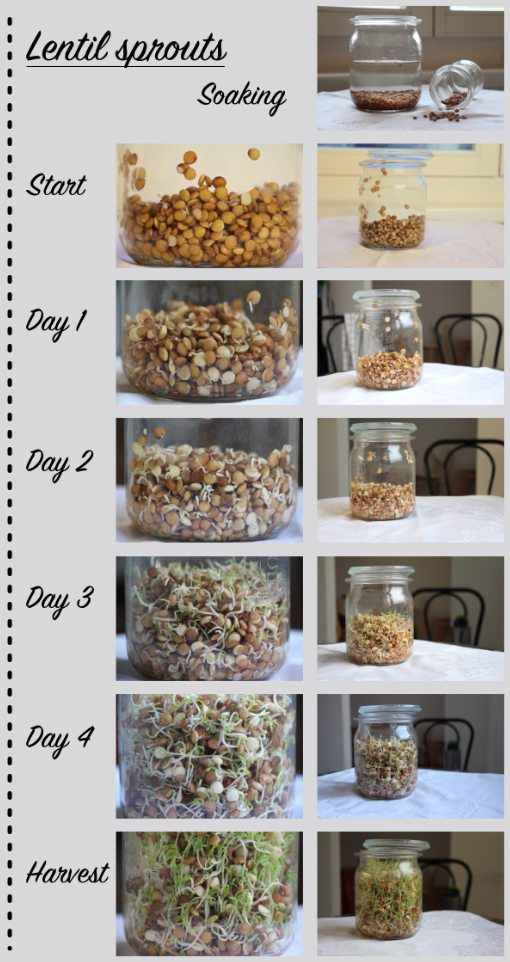
When the sprouts are 5 days old, they already fill the whole glass. According to many websites, lentils should sprout for 3-4 days, but I have found that it takes one to two days longer if it is a bit colder in the apartment during the winter. That doesn’t matter. You can simply “harvest” them when you like them.
Processing and storage of sprouts
If your sprouts have germinated long enough, rinse them under cold water one last time and consume immediately. You can also store them in the refrigerator for one or two days in an airtight container. The sooner they are eaten, the better. Simply rinse well again before preparing and somewhat sort out any detached shells or lentils that have not sprouted. But don’t be too meticulous! Even unsprouted, soaked lentils can be consumed without any health problems in those small quantities.
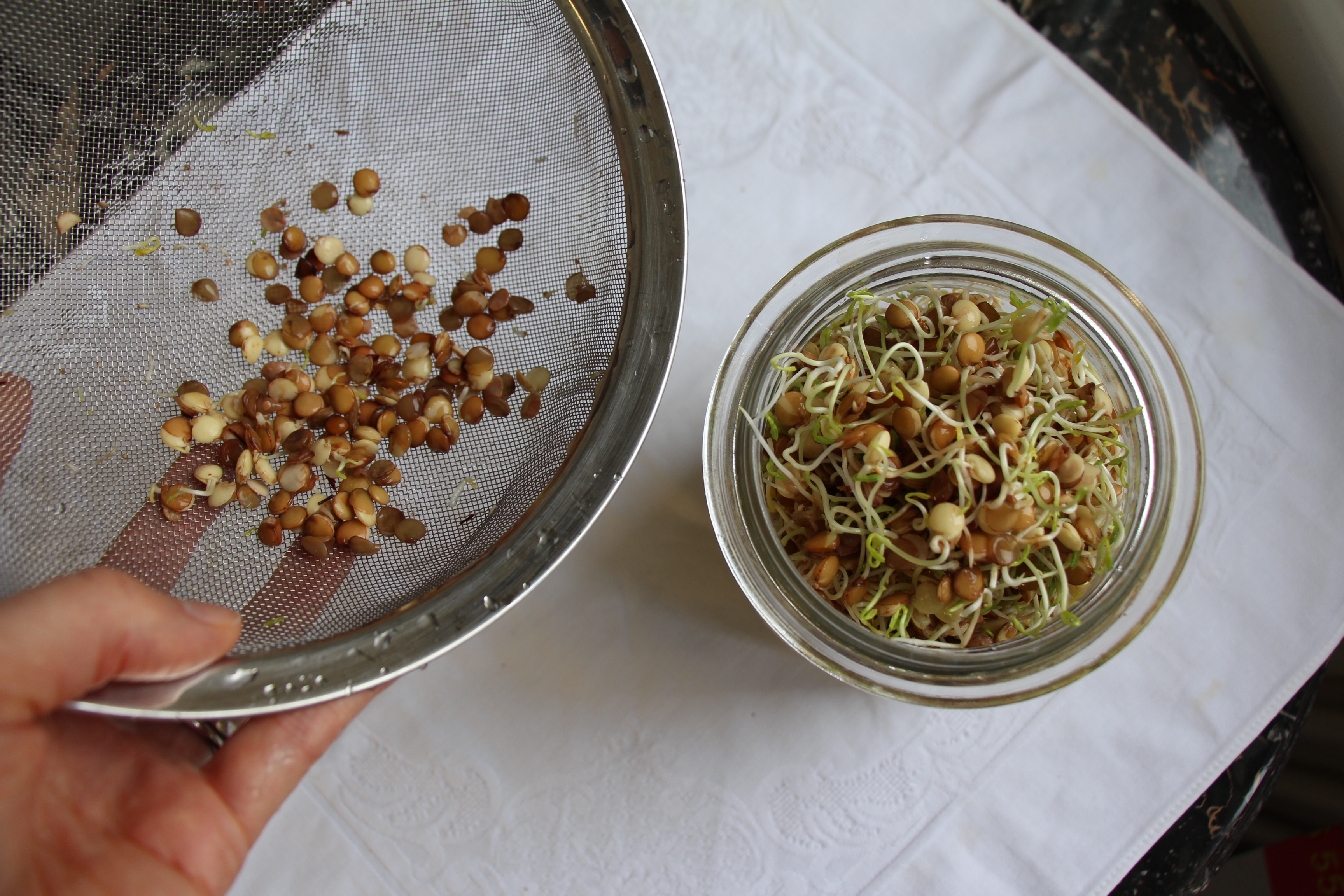
Packaged sprouts in the supermarket usually come with an indication on the packaging that the small plants must be blanched before consumption. Just between us: the manufacturers have to write this on the boxes in order to avoid EHEC outbreaks like in 2011 in Europe, where some poor sprouts were convicted of being the trigger for the epidemic, but somebody had just used infested water for growing them. First and foremost, by printing precaution signs onto their products, companies cover themselves legally in case something does happen, and the consumer didn’t act according to their instructions. However, if you treat your homegrown sprouts carefully, always rinse them well with fresh, clean water and then use them quickly when they are finished, you can safely eat them raw. Blanching would counteract the whole purpose of the sprouts: even by briefly heating them up, a large part of the freshly produced vitamins (especially vitamin C) in the tender vegetables will be destroyed and lost.
My Tip: As I mentioned above, a delicious recipe for a winter salad with lentil sprouts will follow in my next blog post. In the meantime, you can start growing your lentil sprouts and taste-test them in just a few days. Have fun with it!